

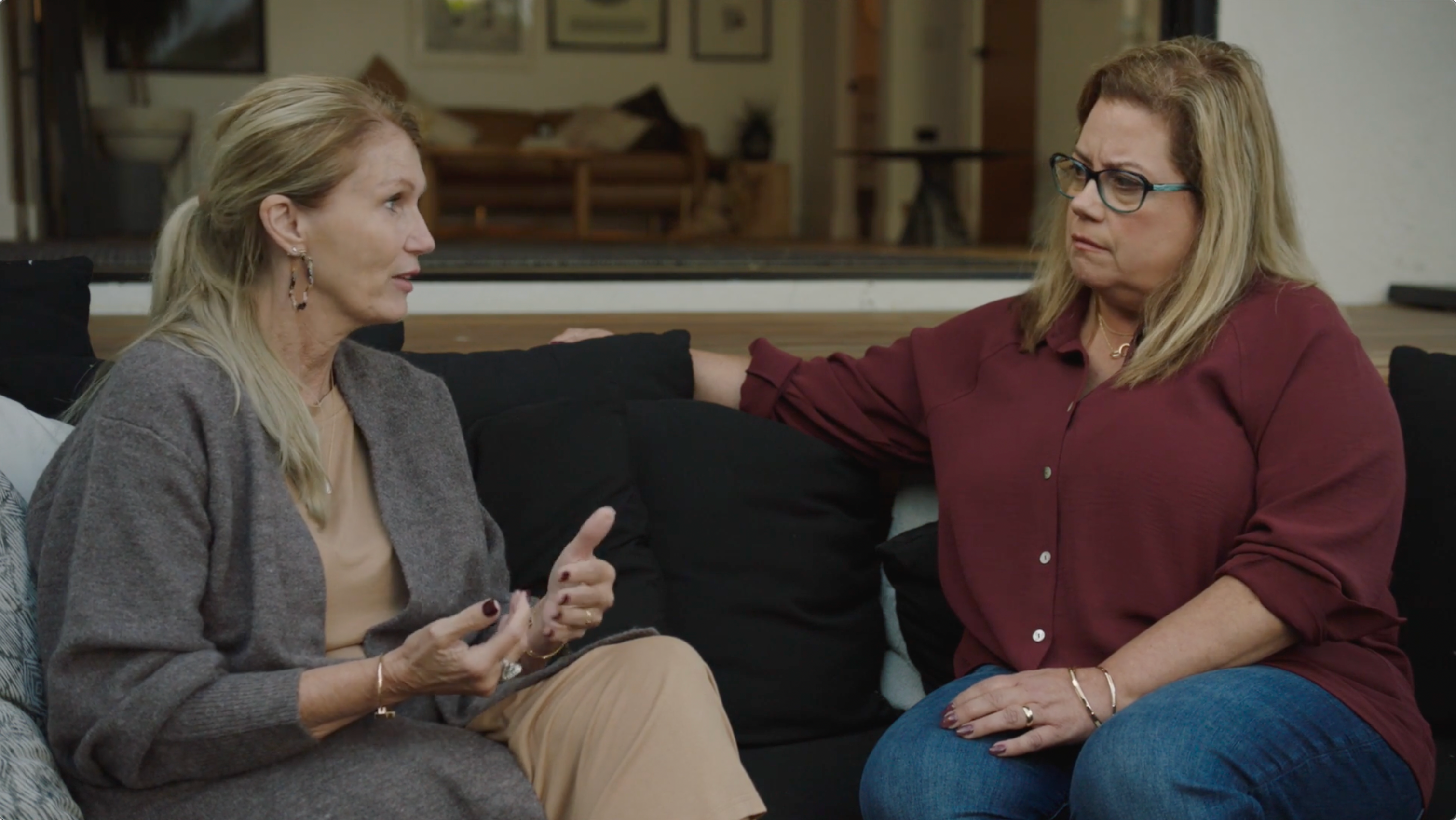
Julee: [00:00:00] What was it like watching your child grow up with the itch with the Alagille syndrome?
Lisa: It was very challenging. From the time she was able to scratch, she did. She would scratch her ears [00:00:30] until they bled, and we had no idea what was going on. The docs, they couldn't tell us anything. They had no idea. Until we got her diagnosed at 11 months, we had no idea if she was going to live. She was itching very bad. They really couldn't do anything. They had already put her on 2 or 3 medications and none of those helped. We managed it the best way we could. What about you?
Julee: [00:01:00] She was constantly itchy and fussy. There was nothing I could do to console her. She'd itch her ears and her feet, and it was nonstop. It was just painful to see her suffering so much. Then, as a mother, we feel like we're responsible for stopping that. [00:01:30] I couldn't stop that with her. Kids made fun of her sometimes, and I think that was probably the most heartbreaking thing. As a mother, the other kids didn't understand what was happening. It made me very angry at different times.
Lisa: What changes did you notice in Emma once she started taking LIVMARLI?
Julee: Instead of seeing her constantly itching, she was able to use those fingers to create things, [00:02:00] to play instruments. I feel like I got to see her blossom and her self-confidence took off. She wasn't worried what other people were thinking about her. It was beautiful.
Lisa: Abby as well, after she started taking LIVMARLI, she said she wasn't waking up itching as much. She's just feeling much better after LIVMARLI.
Julee: Now that Abby's a little bit older, what ways is [00:02:30] she taking charge of her own health?
Lisa: She's in charge of taking her LIVMARLI, making sure that she gets it, and making sure she stays on her routines, and seeing her doctor, keeping her appointments, doing all those things that we used to do when she was younger. When she first went to college, because I worried a little bit that she wouldn't take care of herself. She takes her medication, [00:03:00] and she stays on top of her doctor's appointments. I'm very proud of her.
Julee: That's nice.
Lisa: I'm very proud of her.
[music]
Lisa: What was your process of getting LIVMARLI, Julee?
Julee: It was surprisingly very easy. They contact you, they communicate every step [00:03:30] of the way. Then they plan when to send LIVMARLI out to you. I think what I really liked most was they helped me with the insurance part of it, because to me, that was always the most difficult part. What was your experience like?
Abby: Almost exactly the same. I'm on my own insurance, and they were really helpful every step of the way. Every time I would call, they would call me back as soon as they said they were going to.
Julee: They [00:04:00] communicate really well, don't you think?
Emma: Yes.
Abby: I love my navigator. She's amazing. She is sweet, awesome, calls when she says she's going to. At the beginning, it was like every week or every 2 weeks, she just wanted to follow up on how LIVMARLI was going. Now it's like every 3 months, and she calls right on the dot when it's nice to just have someone that I know that I can call if I have any questions at all.
Julee: I've always known what was inside of [00:04:30] Emma and what her potential was, but with all the itching, it was really hard for Emma to be the person that she could be because the itching controlled her life. She reminds me of a little butterfly that has taken off and blossomed.
Lisa: I don't know. No parent really knows what it's like until they have a sick child. There was a time that I didn't know that if we'd ever find anything that would help with the itching. I feel that we've found something now that is helping you, and I am not as afraid. I'm not as worried all the time. I'm very proud of her and her beautiful life that she's building. I'm thankful for LIVMARLI, y'all, really.
Speaker 1:
INDICATIONS
[00:05:30] LIVMARLI (maralixibat) oral solution and tablets are indicated for the treatment of cholestatic pruritus in patients who are 3 months of age and older with Alagille syndrome.
LIVMARLI (maralixibat) oral solution and tablets are indicated for the treatment of cholestatic pruritus in patients who are 12 months of age and older with progressive familial intrahepatic cholestasis (PFIC).
Limitations of Use: LIVMARLI is not recommended in a subgroup of PFIC type 2 patients with specific ABCB11 [00:06:00] variants resulting in nonfunctional or complete absence of bile salt export pump (BSEP) protein.
IMPORTANT SAFETY INFORMATION
CONTRAINDICATIONS
LIVMARLI (maralixibat) oral solution and tablets are contraindicated in patients with prior or active hepatic decompensation events (eg, variceal hemorrhage, ascites, or hepatic encephalopathy).
WARNINGS AND PRECAUTIONS
Hepatotoxicity: LIVMARLI treatment is associated [00:06:30] with a potential for drug-induced liver injury (DILI). In the PFIC trial, treatment-emergent hepatic decompensation events and elevations of liver tests or worsening of liver tests occurred. Two patients experienced DILI attributable to LIVMARLI. Two additional patients experienced DILI in the open-label extension portion of the trial. Of these 4 patients, 1 patient required liver transplant and another patient died.
In the Alagille syndrome trial, treatment-emergent elevations of liver tests or worsening of liver tests occurred.
[00:07:00] Obtain baseline liver tests and monitor during treatment. Liver-related adverse reactions and physical signs of hepatic decompensation should also be monitored. Dose reduction or treatment interruption may be considered if abnormalities occur in the absence of other causes. For persistent or recurrent liver test abnormalities, consider treatment discontinuation. Permanently discontinue LIVMARLI if a patient experiences the following: persistent or recurrent liver test abnormalities, clinical hepatitis, or a hepatic decompensation [00:07:30] event.
Gastrointestinal Adverse Reactions: Diarrhea and abdominal pain were reported as the most common adverse reactions. Monitor for dehydration and treat promptly. Consider reducing the dosage or interrupting LIVMARLI treatment if a patient experiences persistent diarrhea or diarrhea with bloody stool, vomiting, dehydration requiring treatment, or fever.
Fat-Soluble Vitamin (FSV) Deficiency: Patients can have FSV deficiency (vitamins A, D, E, and K) at baseline, [00:08:00] and LIVMARLI may adversely affect absorption of FSVs. Treatment-emergent bone fracture events have been observed more frequently with patients treated with LIVMARLI compared with patients treated with placebo. If bone fractures or bleeding occurs, consider interrupting LIVMARLI and supplement with FSVs. LIVMARLI can be restarted once FSV deficiency is corrected and maintained at corrected levels.
Risk of Propylene Glycol Toxicity (Pediatric Patients Less Than 5 Years of Age): LIVMARLI oral solution contains propylene [00:08:30] glycol. Total daily intake of propylene glycol should be considered for managing the risk of propylene glycol toxicity. Monitor patients for signs of propylene glycol toxicity. Discontinue LIVMARLI if toxicity is suspected.
ADVERSE REACTIONS
Alagille syndrome: The most common adverse reactions are diarrhea, abdominal pain, vomiting, FSV deficiency, liver test abnormalities, and bone fractures.
PFIC: The most common adverse reactions are diarrhea, FSV [00:09:00] deficiency, abdominal pain, liver test abnormalities, hematochezia, and bone fractures.
DRUG INTERACTIONS
Administer LIVMARLI at least 4 hours before or 4 hours after administration of bile acid binding resins.
A decrease in the absorption of OATP2B1 substrates (eg, statins) due to OATP2B1 inhibition by LIVMARLI in the GI tract cannot be ruled out. Consider monitoring the drug effects of OATP2B1 [00:09:30] substrates as needed.
DOSING INFORMATION
In patients with Alagille syndrome, LIVMARLI is taken once daily, 30 minutes before [00:21:00] a meal in the morning. In patients with PFIC, LIVMARLI is taken twice daily, 30 minutes before a meal. Refer to the dosing by weight guidelines and the full Prescribing Information for complete details on dosing for the oral solution and tablet formulations. The provided oral solution dosing dispenser must be used to accurately measure the dose. Any remaining LIVMARLI oral [00:010:00] solution should be discarded 100 days after first opening the bottle. LIVMARLI tablets can be used in patients weighing ≥25 kg who can swallow tablets.
Please see full Prescribing Information for LIVMARLI at LIVMARLIhcp.com. [00:10:30]
[music]
[00:10:40] [END OF AUDIO]


Meet real physicians and families who share their experiences and offer their perspectives on everything from diagnosis to treatment with LIVMARLI.

See how LIVMARLI helps relieve cholestatic pruritus in Alagille syndrome and progressive familial intrahepatic cholestasis.1-3