
Do you have any patients with cholestatic pruritus who have the following?

≈28%
to
52%
of patients with idiopathic adult-onset cholestasis had an underlying genetic cause, according to several recent studies.12-15
What is PFIC?
PFIC is a group of rare, genetic liver diseases caused by mutations in hepatocellular transport genes.17 PFIC is characterized by impaired bile acid secretion or transport, leading to progressive cholestatic liver disease.17,18
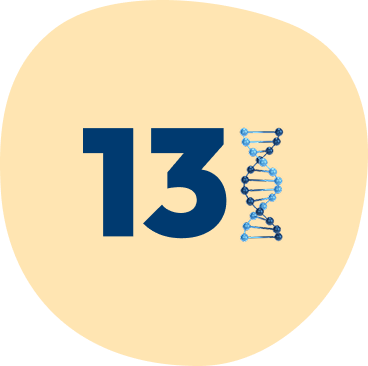
To date, 13 genetically distinct subtypes have been identified,
with more subtypes expected as research advances.19
with more subtypes expected as research advances.19

PFIC can be easy to miss
Symptoms may mimic other diseases, such as20:
-
 Intrahepatic cholestasis of pregnancy
 -
 Drug-induced cholestasis or liver injury
-
 Cholesterol gallstone disease
 -
 Adult idiopathic/cryptogenic cirrhosis
Cholestatic pruritus symptoms may be minimized.23
Genetic testing can support a clinical PFIC diagnosis
Genetic testing can be of diagnostic benefit in patients for whom there is2,12:

No diagnosis
Atypical features of
a known diagnosis
a known diagnosis
Poor response
to treatment
to treatment
Genetic testing can support a clinical diagnosis; it cannot be used to exclude one19
-
 A positive result can support diagnosis and guide treatment decisions
 -
 A negative result—or a result showing a variant of unknown significance—does not rule out PFIC. Continue to evaluate based on clinical presentation
Genetic testing is a helpful tool for diagnosing PFIC, but it’s not the only one.
Keep these key points in mind:
-
 Look for atypical presentations. In adults, PFIC can mimic other cholestatic liver conditions and may not follow classic patterns.20
 -
Dig deeper. Whether a patient lacks a specific diagnosis or their current diagnosis doesn’t fully explain all their symptoms, ask open-ended questions—especially about symptoms like cholestatic pruritus that may be downplayed or overlooked.23
-
Let clinical features lead the way. Diagnosis may be based on clinical findings, especially in patients with persistent cholestatic pruritus. Treatment may be warranted, even in the absence of a confirmed genetic diagnosis.19

References:
1. Tamburro C, Mentzinger A, Jain D, Vilarinho S. Idiopathic cholestasis in adults: genetics as another lens for liver pathologists. Hum Pathol. 2025;165:105916. doi: 10.1016/j.humpath.2025.105916.
2. European Association for the Study of the Liver: Verkade HJ, Felzen A, Keitel V, et al. EASL Clinical Practice Guidelines on genetic cholestatic liver diseases. J Hepatol. 2024;81(2):303-325. doi:10.1016/j.jhep.2024.04.006
3. Hilscher MB, Kamath PS, Eaton JE. Cholestatic liver diseases: a primer for generalists and subspecialists. Mayo Clin Proc. 2020;95(10):2263-2279. doi:10.1016/j.mayocp.2020.01.015
4. Nayagam JS, Miquel R, Thompson RJ, Joshi D. Genetic cholestasis in children and adults. J Hepatol. 2024;80(4):670-672. doi:10.1016/j.jhep.2023.11.028
5. Goubault P, Brunel T, Rode A, Bancel B, Mohkam K, Mabrut J-Y. Low-phospholipid associated cholelithiasis (LPAC) syndrome: a synthetic review. J Visc Surg. 2019;156(4):319-328. doi:10.1016/j.viscsurg.2019.02.006
6. Hsing AW, Bai Y, Andreotti G, et al. Family history of gallstones and the risk of biliary tract cancer and gallstones: a population-based study. Int J Cancer. 2007;121(4):832-838. doi:10.1002/ijc.22756
7. Chascsa DM, Lindor KD. Antimitochondrial antibody-negative primary biliary cholangitis: is it really the same disease? Clin Liver Dis. 2018;22(3):589-601. doi:10.1016/j.cld.2018.03.009
8. Boehlig A, Gerhardt F, Petroff D, et al. Prevalence of pruritus and association with anxiety and depression in patients with nonalcoholic fatty liver disease. Biomedicines. 2022;10(2):1-10. doi:10.3390/biomedicines.10020451
9. New MASLD Nomenclature. AASLD. Accessed October 30, 2025. https://www.aasld.org/new-masld-nomenclature
10. Geladari EV, Vallianou NG, Margellou E, Kounatidis D, Sevastianos V, Alexopoulou A. Benign recurrent intrahepatic cholestasis: where are we now? Gastroenterol Insights. 2024;15(1):156-167. doi:10.3390/gastroent15010011
11. Zu Y, Yang J, Zhang C, Liu D. The pathological mechanisms of estrogen-induced cholestasis: current perspectives. Front Pharmacol. 2021;12:1-9. doi:10.3389/fphar.2021.761255
12. Nayagam JS, Foskett P, Strautnieks S, et al. Clinical phenotype of adult-onset liver disease in patients with variants in ABCB4, ABCB11, and ATP8B1. Hepatol Commun. 2022;6(10):2654-2664. doi:10.1002/hep4.2051
13. Dröge C, Bonus M, Baumann U, et al. Sequencing of FIC1, BSEP and MDR3 in a large cohort of patients with cholestasis revealed a high number of different genetic variants. J Hepatol. 2017;67(6):1253-1264. doi:10.1016/j.jhep.2017.07.004
14. Zheng M, Hakim A, Konkwo C, et al. Advancing diagnosis and management of liver disease in adults through exome sequencing. eBioMedicine. 2023;95:104747. doi:10.1016/j.ebiom.2023.104747
15. Bittencourt P, Codes L, Andrade A, et al. Frequency of ATP8B1, ABCB11 and ABCB4 gene mutations in adult patients with idiopathic chronic cholestasis. Poster presented at: EASL Congress 2024; June 5-8, 2024; Milan, Italy.
16. Jacquemin E. Progressive familial intrahepatic cholestasis. Clin Res Hepatol Gastroenterol. 2012;36(suppl 1):S26-S35. doi:10.1016/S2210-7401(12)70018-9
17. Felzen A, Verkade HJ. The spectrum of progressive familial intrahepatic cholestasis diseases: update on pathophysiology and emerging treatments. Eur J Med Genet. 2021;64(11):1-8. doi:10.1016/j.ejmg.2021.104317
18. Kamath BM, Stein P, Houwen RHJ, Verkade HJ. Potential of ileal bile acid transporter inhibition as a therapeutic target in Alagille syndrome and progressive familial intrahepatic cholestasis. Liver Int. 2020;40(8):1812-1822. doi:10.1111/liv.14553
19. Vitale G, Sciveres M, Mandato C, Pio d’Adamo A, Di Giorgio A. Genotypes and different clinical variants between children and adults in progressive familial intrahepatic cholestasis: a state-of-the-art review. Orphanet J Rare Dis. 2025;20(1):1-21. doi:10.1186/s13023-025-03599-2
20. Stättermayer AF, Halilbasic E, Wrba F, Ferenci P, Trauner M. Variants in ABCB4 (MDR3) across the spectrum of cholestatic liver diseases in adults. J Hepatol. 2020;73(3):651-663. doi:10.1016/j.jhep.2020.04.036
21. GeneCards®. The Human Gene Database. PSKH1 gene - protein serine kinase H1. Updated July 17, 2025. Accessed October 31, 2025. https://www.genecards.org/cgi-bin/carddisp.pl?gene=PSKH1
22. Online Mendelian Inheritance in Man (OMIM). Cholestasis, progressive familial intrahepatic, 13; PFIC13. Johns Hopkins University School of Medicine. Updated October 14, 2024. Accessed October 31, 2025. https://www.omim.org/entry/620962
23. Data on file. REF-01343. Mirum Pharmaceuticals, Inc.